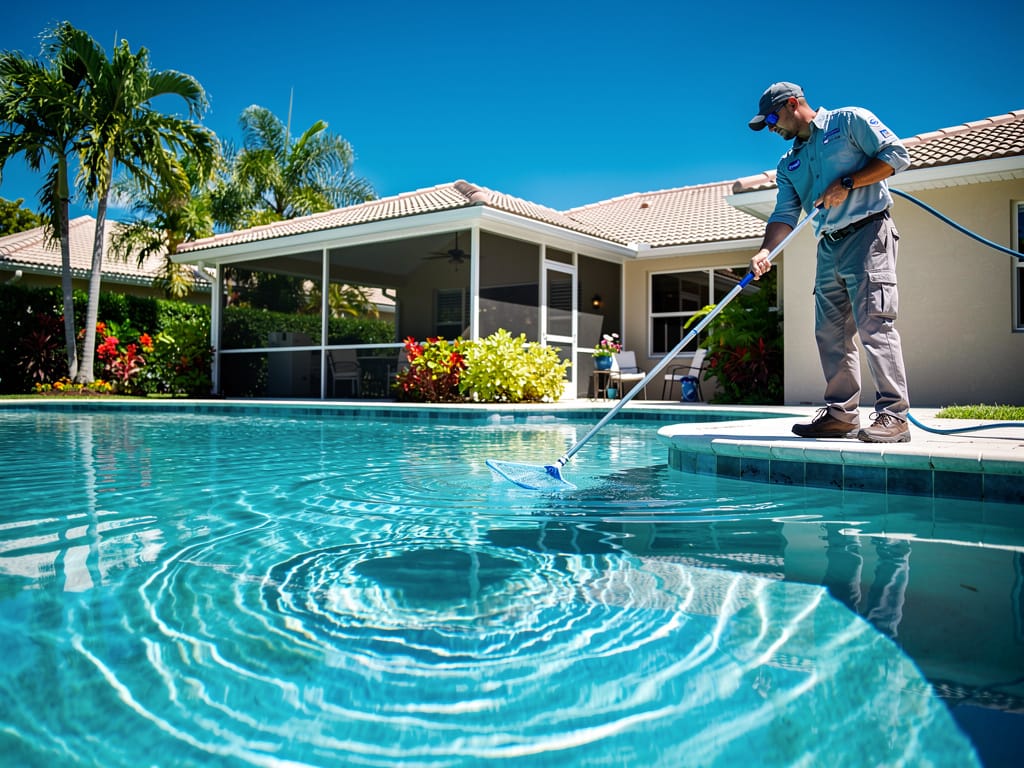
Quick Answer: Pool cleaning removes physical debris — leaves, algae, dirt — through skimming, brushing, and vacuuming. Pool maintenance is broader: chemical testing and balancing, equipment inspection, and system health monitoring. In Pompano Beach, FL, you need both every single week. Neither substitutes for the other, and in South Florida’s climate, skipping either creates problems within days.
When Pompano Beach homeowners compare pool service quotes, they sometimes encounter offers that sound similar but cover very different scopes. “Pool cleaning” and “pool maintenance” are often used interchangeably in marketing materials — but they describe distinct types of service. Understanding the difference helps you evaluate what you’re actually getting, whether your current service is complete, and what questions to ask before you sign a contract.
What Pool Cleaning Covers
Pool cleaning refers to the physical work of removing debris, organic matter, and buildup from your pool:
- Surface skimming: Removing leaves, insects, pollen, and floating material with a hand skimmer or from the automatic surface skimmer basket
- Wall and step brushing: Physically scrubbing all interior surfaces — walls, steps, benches, corners — to break algae spores loose before they can establish
- Floor vacuuming: Removing settled debris, dirt, and dead algae cells from the pool floor (manual or via automatic/robotic vacuum)
- Basket emptying: Clearing the skimmer basket and pump strainer basket of accumulated debris
- Filter cleaning or backwash: Removing captured particles from the filtration system when pressure rises above baseline
Cleaning produces the visible, tactile result — a pool that looks clear. But looks are deceiving: a visually clean pool can still harbor bacteria, algae, or unsafe chemical levels that only chemistry testing reveals.
What Pool Maintenance Covers
Pool maintenance is the full system approach — it includes cleaning but adds the chemical and mechanical dimensions:
- Water chemistry testing: Measuring pH, free chlorine, total alkalinity, calcium hardness, and cyanuric acid every visit
- Chemical adjustment: Adding the specific chemicals your pool needs based on test results — not a fixed dose regardless of readings
- Equipment inspection: Checking pump function, motor condition, filter pressure, heater operation, salt cell output, automation settings, and lighting
- Preventive monitoring: Catching early signs of equipment wear, plumbing leaks, surface cracks, or chemical drift before they become expensive problems
- Service documentation: Recording chemistry readings and service actions to track trends over time (and for HOA compliance in Pompano Beach communities)
Why Pompano Beach Specifically Requires Both, Every Week
The question of “how often” is more urgent in Pompano Beach than in most US cities:
Algae and Heat
Algae growth accelerates above 78°F. Pompano Beach pool water averages 82–92°F from May through October — conditions where algae on unbrished wall surfaces can establish a visible colony within 4–6 days. Brushing breaks the attachment cycle. Miss one week in July and you’ll know it.
Coastal Salt Air and Debris
Wind-driven salt from the ocean and Intracoastal increases mineral load on pool surfaces and equipment. This is specific to Pompano Beach and coastal Broward — it’s why pools in Palm Aire, Pompano Isles, and waterfront communities have faster scaling on salt cells and tile surfaces than inland pools. Weekly chemistry monitoring catches calcium and alkalinity drift earlier.
Hurricane Season and Rain Events
Pompano Beach’s direct Atlantic exposure means tropical weather is a real maintenance factor June through November. Heavy rain events (2″+ in 24 hours) can drop free chlorine by 1–2 ppm in a single afternoon — enough to create algae conditions by the next morning. A weekly service visit catches this before it becomes a green pool emergency. A bi-weekly schedule may not.
HOA Documentation Requirements
Palm Aire’s multiple sub-HOAs and other Pompano Beach gated communities often require documented proof of professional pool service. “Full maintenance” service — not cleaning-only — is typically what HOA boards want to see. A cleaning-only contract doesn’t produce the chemistry documentation that satisfies most HOA inspection requirements.
Comparing Common Service Plans in Pompano Beach
| Plan | What’s Included | Suitable For | Monthly Cost |
|---|---|---|---|
| Cleaning only | Debris removal, brushing, vacuuming | Homeowners who test and adjust chemistry themselves | $45–$75 |
| Chemical / maintenance only | Water testing, balancing, equipment check | Homeowners who clean their own pools | $55–$90 |
| Full service | All cleaning + maintenance tasks | Most homeowners, all HOA communities | $85–$155 |
For Pompano Beach HOA communities including Palm Aire, Cypress Head, and Ramblewood Estates, full service is generally the only plan that satisfies documentation requirements and maintains pool health through South Florida’s year-round conditions.
For full-service pool cleaning and maintenance in Pompano Beach, FL, Fort Lauderdale Pool Service provides weekly visits with written chemistry documentation. Call (954) 501-2754 or visit our Pompano Beach service page.
Frequently Asked Questions
What is the difference between pool cleaning and pool maintenance?
Pool cleaning is the physical removal of debris through skimming, brushing, and vacuuming. Pool maintenance is broader — it encompasses cleaning plus water chemistry testing and balancing, equipment inspection, and service documentation. Both are required for a healthy pool in Pompano Beach. Cleaning keeps it clear; maintenance keeps it safe.
Can I hire a pool cleaning service and handle chemicals myself in Pompano Beach?
Yes, but only if you can reliably test and adjust all 5 chemistry parameters (pH, free chlorine, alkalinity, calcium hardness, CYA) every week, year-round. In Pompano Beach’s climate, missing even one weekly chemistry check during summer can result in algae growth or unsafe conditions within days. If you have chemistry knowledge and test equipment, a cleaning-only contract can work. Most homeowners find full service more reliable.
Does my Palm Aire HOA require documented pool maintenance?
Many Palm Aire sub-HOA communities require documented professional maintenance, but requirements vary by sub-association. Check your HOA covenants or ask your property manager. If documentation is required, ensure your service company provides written chemistry readings and service records after every visit — not just a verbal confirmation that “the pool was serviced.”
How does coastal salt air affect pool maintenance in Pompano Beach?
Salt-laden air from the ocean and Intracoastal accelerates calcium scaling on tile surfaces, salt cell electrodes, and heat exchanger components. Coastal Pompano Beach pools need more frequent salt cell cleaning (every 2–3 months vs. 3–4 months inland) and more attentive monitoring of calcium hardness. A pool company experienced in coastal Broward maintenance will factor this into their service approach.
After a hurricane, do I need cleaning or maintenance service?
Both — simultaneously. Post-storm pools need immediate chemistry shock treatment (maintenance) to prevent algae growth from the chemical dilution heavy rain causes, plus debris removal (cleaning) from leaves, branches, and other storm material. Full-service companies with storm protocols can address both in the same emergency visit.