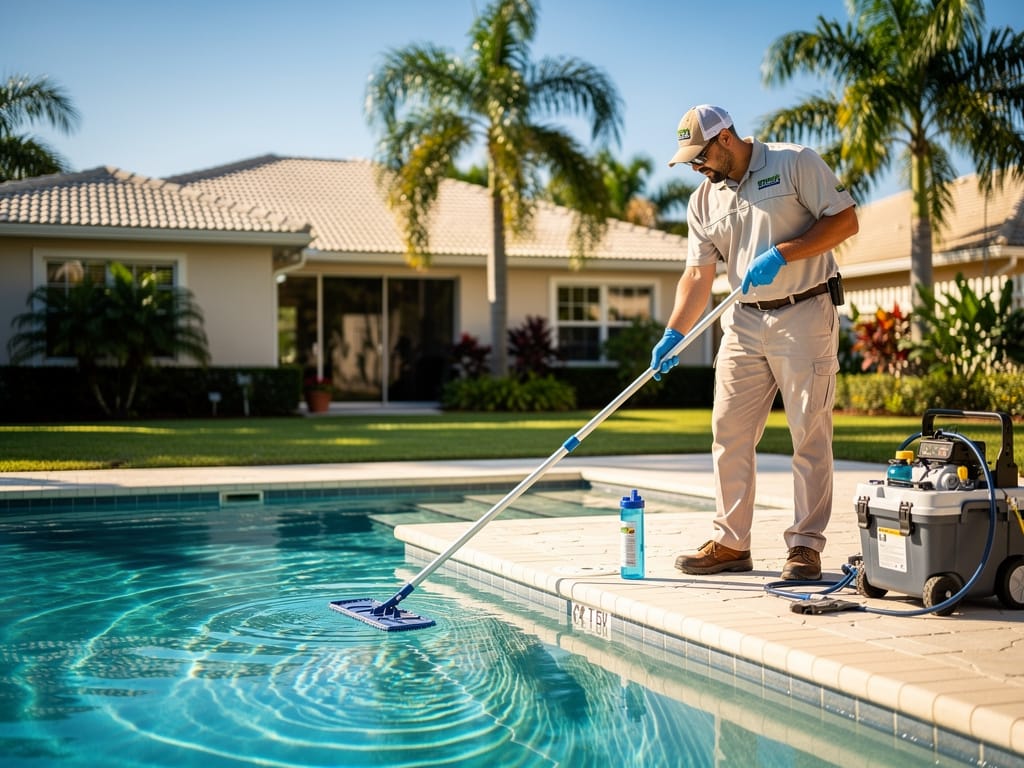
Quick Answer: Pool cleaning removes physical debris — leaves, dirt, algae — through skimming, brushing, and vacuuming. Pool maintenance is broader: chemical balancing, equipment inspection, and overall system health. In Coral Springs, FL, you need both every week. Neither replaces the other.
When Coral Springs homeowners shop for pool service, they often encounter two terms used almost interchangeably: “pool cleaning” and “pool maintenance.” They’re not the same thing, and understanding the difference helps you evaluate what you’re actually paying for — and whether your current service covers everything your pool needs.
What Pool Cleaning Means
Pool cleaning refers specifically to the physical removal of debris, biological matter, and buildup from pool surfaces and the water itself. The core cleaning tasks are:
- Surface skimming: Removing leaves, insects, pollen, and floating debris from the water surface using a hand skimmer or automatic surface skimmer system
- Wall and tile brushing: Physically scrubbing pool walls, steps, and the waterline tile to prevent algae from attaching and biofilm from building up
- Floor vacuuming: Removing settled debris, dirt, and dead algae from the pool floor — done manually or with an automatic/robotic vacuum
- Basket emptying: Clearing the skimmer basket and pump strainer basket of accumulated debris
- Filter cleaning or backwash: Removing collected particles from the filtration system (backwash for sand/DE filters; cartridge removal and rinse for cartridge filters)
Cleaning is the visible, tactile part of pool care. A clean-looking pool is the result of effective cleaning. But a pool can look clean and still be chemically unsafe to swim in — which is why cleaning alone is never enough.
What Pool Maintenance Means
Pool maintenance is the broader discipline of keeping all pool systems functioning correctly. It includes cleaning, but extends into chemistry and equipment:
- Water chemistry testing and balancing: Testing pH, free chlorine, total alkalinity, calcium hardness, and cyanuric acid; adjusting each parameter to safe ranges
- Chemical treatment: Adding chlorine, pH adjusters, algaecide, stabilizer, and other chemicals based on test results
- Equipment inspection: Checking pump operation, motor condition, filter pressure, heater function, salt cell output (for saltwater pools), automation settings, and lighting
- Preventive identification: Noticing early signs of equipment wear, plumbing leaks, surface cracks, or chemical imbalances before they become expensive problems
- Record keeping: Documenting water chemistry readings and service actions over time to spot trends
Maintenance is what keeps your pool safe, not just clean. A pool with perfect chemistry but no physical cleaning will accumulate debris and allow algae to anchor on unbrished surfaces. A pool that’s physically spotless but chemically imbalanced can cause eye irritation, skin reactions, or harbor bacteria. You need both.
Why Coral Springs Pools Need Both Every Week
In cooler climates, some homeowners can stretch cleaning intervals to every two weeks without major consequences. In Coral Springs, the combination of heat, UV, and year-round use means both cleaning and maintenance tasks need to happen on a 7-day cycle:
- Algae growth accelerates above 78°F — Coral Springs pool water averages 82–90°F from May through October. Algae that isn’t physically brushed off walls will establish a colony within days at these temperatures. Brushing weekly eliminates the attachment points before algae becomes visible.
- UV burns chlorine daily — even with proper CYA stabilizer, chlorine demand in South Florida is high. Waiting two weeks between chemical adjustments allows chlorine to drop to unsafe levels.
- Rain and organic load are constant — West Broward weather brings frequent rain that dilutes chemicals and introduces organics. Bather load continues year-round.
What to Look for in a “Full Service” Plan
When a Coral Springs pool company advertises “full service,” it should include both cleaning and maintenance elements. Before signing a contract, confirm the following are covered:
| Service | Cleaning? | Maintenance? | Included in Full Service? |
|---|---|---|---|
| Surface skimming | ✓ | Yes | |
| Wall brushing | ✓ | Yes | |
| Floor vacuuming | ✓ | Yes | |
| 5-point water test | ✓ | Yes | |
| Chemical balancing | ✓ | Yes | |
| Filter check/backwash | ✓ | ✓ | Yes |
| Equipment inspection | ✓ | Yes | |
| Service report | ✓ | Yes (from good companies) |
Cleaning-Only vs. Maintenance-Only Plans: When Either Might Make Sense
Cleaning-only plans ($45–$75/month) are rare but occasionally offered to homeowners who want to handle their own chemistry. This only makes practical sense if you have pool chemistry knowledge, test your water weekly, and are comfortable adding chemicals. It’s not suitable for HOA communities where documented professional service is required.
Chemical/maintenance-only plans ($55–$90/month) handle chemistry and equipment checks but leave physical cleaning to the homeowner. Some Coral Springs homeowners with robotic vacuums and ample time choose this option. The risk: brushing is still manual work that most robotic vacuums don’t replicate, and wall algae often develops even with proper chemistry if brushing is inconsistent.
For most Coral Springs homeowners, full-service weekly maintenance ($85–$150/month) is the appropriate choice — it covers every task your pool requires with no gaps.
For comprehensive pool cleaning and maintenance in Coral Springs, FL, Fort Lauderdale Pool Service offers full-service weekly plans with written service reports. Visit our Coral Springs service page or call (954) 501-2754.
Frequently Asked Questions
Is pool cleaning or pool maintenance more important?
Neither — both are essential and neither replaces the other. Cleaning removes physical debris and prevents algae from anchoring on surfaces. Maintenance keeps water chemistry safe and equipment functioning. Skipping either creates problems: a dirty pool with perfect chemistry is still a breeding ground for algae; a spotless pool with bad chemistry is still unsafe to swim in.
Can a robotic pool cleaner replace professional pool service in Coral Springs?
No. Robotic cleaners handle floor vacuuming and sometimes wall scrubbing, but they don’t test water chemistry, add chemicals, inspect equipment, empty skimmer baskets, or provide service documentation. They’re a useful supplement to professional service, not a replacement — especially in South Florida’s demanding climate.
What is the difference between a pool cleaner and a pool service technician?
A pool cleaner focuses primarily on physical removal of debris. A pool service technician handles both cleaning and the full maintenance scope: water chemistry testing and adjustment, equipment diagnostics, filter management, and chemical treatment. Full-service companies in Coral Springs employ technicians trained in all aspects of pool maintenance.
How often should pool walls be brushed in Coral Springs?
Every week, without exception. In South Florida’s heat, algae spores attach to pool walls and begin establishing colonies within days of a missed brushing. Regular brushing prevents algae from gaining a foothold — once algae is visible, treatment requires significantly more effort and cost than prevention.
What chemicals are adjusted during pool maintenance in Coral Springs?
A complete maintenance visit adjusts: pH (using muriatic acid or soda ash), free chlorine (liquid chlorine, tabs, or salt system adjustment), total alkalinity (sodium bicarbonate), calcium hardness (calcium chloride), and cyanuric acid/stabilizer (cyanuric acid granules). Not every chemical needs adjustment every week — the technician tests first and adds only what’s needed.