# Hurricane Season Pool Prep: A Fort Lauderdale Homeowner’s Guide
Living and working in Broward County, I’ve seen firsthand the impact storms—from Category 1 up to Category 3 hurricanes—can have on our pools and outdoor spaces. From Hurricane Irma in 2017 to the more recent tropical storms, preparing your pool properly isn’t just about protecting your investment; it’s about ensuring safety and minimizing headache when the skies clear.
In this guide, I’ll walk you through exactly what you should do before, during, and after a hurricane to keep your pool in good shape. I’ll also debunk some common myths I hear all the time, like the idea that you should completely drain your pool before a storm. With South Florida’s unique climate, flora, and local regulations, it’s important to take a tailored approach that fits our Broward County environment.
Before the Storm: Essential Pool Prep for Fort Lauderdale Homes
Hurricane season in South Florida runs from June 1st through November 30th, a period when we often see tropical storms and hurricanes that bring heavy rains, strong winds, and flooding. In Broward County, storms often dump large amounts of debris—palm fronds, ficus leaves, and sea grape branches are usual culprits. This natural litter can clog filters and damage pumps if you’re not prepared.
Here’s what you should do in anticipation of a storm:
– **Check and Adjust Water Levels**: Contrary to popular belief, you should **not** drain your pool before a hurricane. Draining can cause structural damage due to hydrostatic pressure, especially in low-lying areas of Fort Lauderdale prone to flooding. Instead, lower your pool water level by about 4-6 inches below the skimmer to accommodate heavy rainfall without overflowing.
– **Balance Pool Chemicals**: Proper chemical balance is key. Aim for a slightly higher chlorine level before the storm to help combat contaminants that floodwaters and debris may introduce. Also, adjust pH and alkalinity to recommended levels to stabilize the water.
– **Secure Pool Equipment**: Turn off and unplug pool pumps, heaters, and chlorinators to protect them from electrical surges and flooding. If possible, move portable equipment indoors or to a sheltered location.
– **Remove or Secure Pool Furniture and Accessories**: Bring in all loose items like chairs, umbrellas, floats, and toys. These can become dangerous projectiles in high winds and cause damage to your pool and surrounding property.
– **Cover Your Pool**: If you have a sturdy pool cover, use it to keep out debris. However, avoid using mesh covers that could fill with water and become heavy hazards.
During the Storm: What Every Fort Lauderdale Pool Owner Should Know
When the storm hits, your best bet is to **leave your pool alone**. This means:
– **Never Drain Your Pool**: I can’t stress this enough. Draining your pool during a hurricane is a common myth that can lead to costly repairs. The ground beneath your pool can become saturated and exert upward pressure, risking cracks or even the pool “popping” out of the ground.
– **Keep Pool Equipment Off**: Do not turn your pumps or filtration systems back on until the storm passes and it’s safe to inspect everything. Electrical equipment exposed to floodwaters can short circuit or sustain permanent damage.
– **Avoid Pool Use**: For safety, no swimming or pool maintenance during the storm. Stay indoors and wait it out.
After the Storm: Restoring Your Broward County Pool
Once the hurricane passes and it’s safe to venture outside, the real work begins. Here’s the step-by-step process I follow for my Fort Lauderdale clients after a storm:
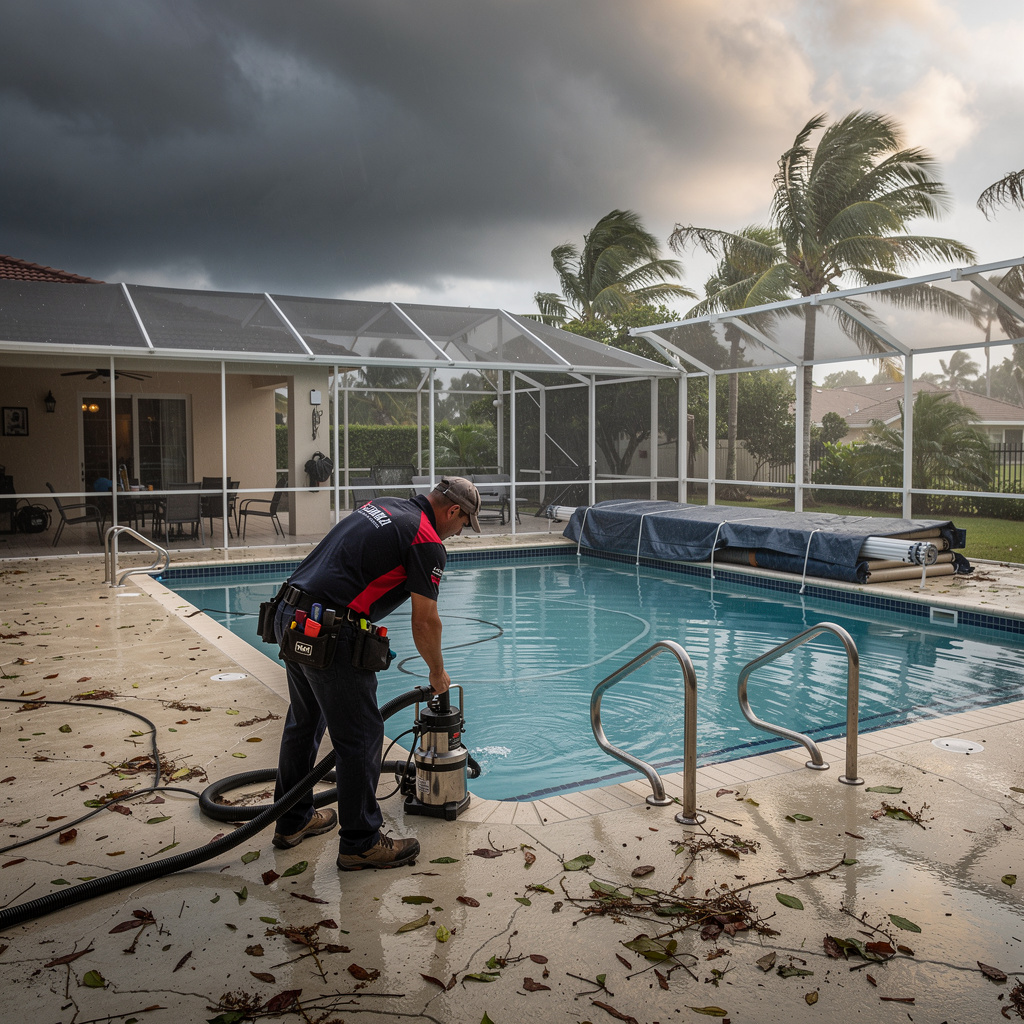
– **Debris Removal**: Start with removing palm fronds, ficus leaves, sea grape branches, and other debris from the pool surface and surrounding deck. Use a skimmer net and a leaf blower or broom for the deck. Clearing debris quickly prevents staining and clogged filters.
– **Inspect Equipment and Pool Area**: Check your pump, filter, heater, and electrical connections for signs of water infiltration or damage. If your equipment was submerged or flooded, call a professional before powering it back on.
– **Test Water Chemistry**: Storm runoff often brings dirt, salt, and organic contaminants into your pool. Coastal Broward pools especially face saltwater intrusion after storms, which can upset chemical balance and corrode equipment if left unchecked. Use a comprehensive testing kit to measure chlorine, pH, alkalinity, calcium hardness, and cyanuric acid.
– **Rebalance Chemicals**: Based on your test results, shock the pool if needed to sanitize and clear cloudy water. Adjust pH and alkalinity to recommended levels to stabilize water chemistry. This step helps prevent algae growth and protects pool surfaces and equipment.
– **Run and Backwash Filter System**: Once equipment checks out and water chemistry is balanced, run your filtration system and backwash filters as necessary to clear out debris and contaminants.
– **Monitor Water Levels**: Heavy rains may have raised your pool’s water level. If it’s significantly above the skimmer, use a submersible pump or siphon to remove excess water gradually.
Debunking the Myth: Why You Should Never Drain Your Pool Before a Hurricane
I often hear homeowners say, “I’m going to drain my pool before the hurricane to avoid flooding and damage.” This advice, while well-intentioned, is actually dangerous for pools in South Florida.
Our region’s high water table and porous limestone geology mean that during heavy rains, groundwater pressure builds beneath your pool. If your pool is empty or significantly low, this hydrostatic pressure may cause the pool shell to lift or crack. This can lead to catastrophic structural damage and expensive repairs.
Instead, keep your pool partially filled, lower the water level slightly, and focus on securing equipment and removing debris. This approach balances safety with protecting your pool’s integrity.
—
Hurricane season in Fort Lauderdale and Broward County is challenging, but with the right preparation and knowledge, you can protect your pool from storm damage and get back to enjoying it quickly after the skies clear. If you want expert help prepping your pool this season or recovering from a storm, don’t hesitate to contact us at [fortlauderdalepoolservice.us](http://fortlauderdalepoolservice.us). Stay safe and pool smart!