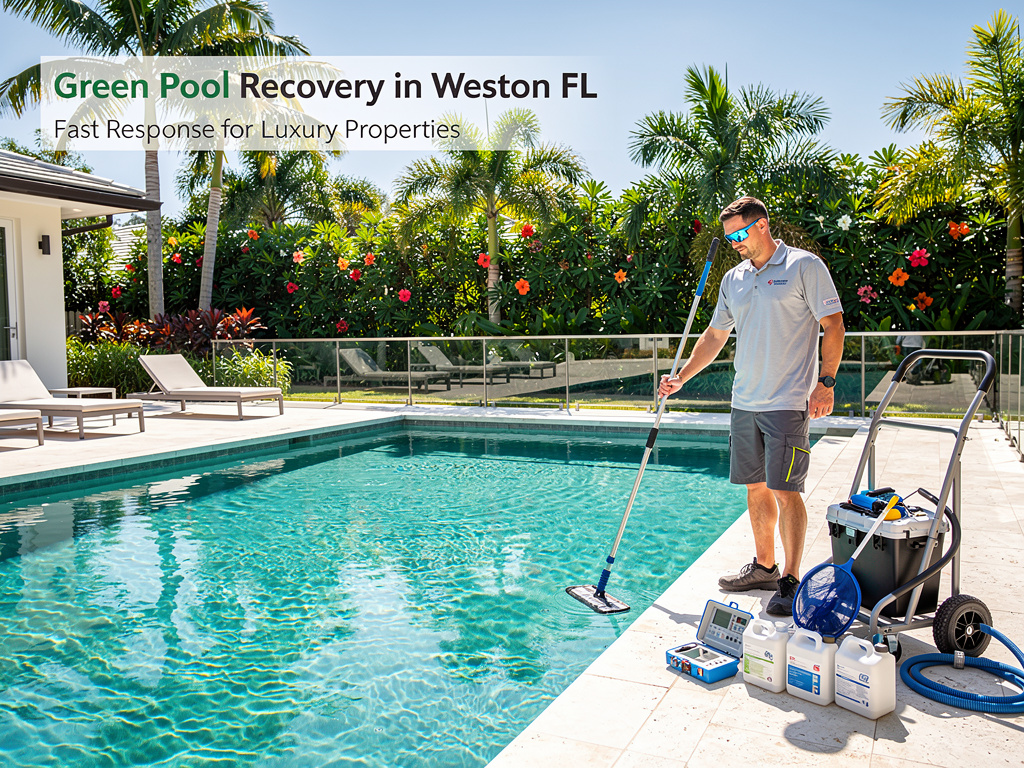
Green Pools in Weston FL: Why They’re Rare But Serious
Weston’s rigorous maintenance culture means green pools are less common here than in many other Broward communities — but they do happen, typically when service is disrupted by storm events, technician changes, or equipment failure. When they occur in Weston, the response needs to be immediate and professional. A green pool in Bonaventure, The Ridges, or Sector 7 is visible to neighbors and HOA management; the window before a compliance notice is short.
Causes of Green Pool Events in Weston FL
Storm and Hurricane Events
Hurricane season (June–November) is the most common trigger for green pool events in Weston. A significant storm can:
- Deposit organic debris that overwhelms chlorine and spikes phosphates
- Dilute chemistry through heavy rainfall and pool overflow
- Disrupt power to pump systems for extended periods
- Introduce contaminants from surrounding landscape flooding
Even with consistent weekly service, a category 1 or higher storm passing through Weston can create green pool conditions within 24–48 hours of the event. Emergency post-storm treatment is a standard service offering from reputable Weston pool companies.
Equipment Failure
Pump failure, salt cell failure (in salt system pools), or automation controller issues can halt chlorine production or circulation. In Weston’s heat, a pool without circulation for 48–72 hours during summer months will begin greening. Weston’s luxury pool owners should have 24-hour emergency contact capability with their service company for equipment failures.
Service Disruption
Technician changes, route restructuring, or gaps between service contracts occasionally create missed visits — one or two skipped weeks in South Florida summer is sufficient to produce visible algae in most pools. Confirm with your service company who covers your route during technician absences before a gap occurs.
Green Pool Recovery Process for Weston Luxury Pools
Recovery for a Weston luxury pool requires additional care beyond standard algae treatment to protect premium finishes:
- Full chemistry assessment: Test all parameters including CYA and phosphates. High CYA (above 80 ppm) in older Weston pools on traditional tablets must be addressed first — chlorine shock is significantly less effective at high CYA levels.
- Phosphate removal: Apply phosphate remover if levels exceed 200 ppb. Do not shock before phosphates are reduced — algae has unlimited food until phosphates are removed.
- Surface-safe shock protocol: Use calcium hypochlorite shock appropriate for your surface type. Some aggressive shock protocols can bleach or etch sensitive finishes — a Weston-caliber technician selects the right product for pebble, glass tile, or quartz surfaces.
- Brushing — thorough and repeated: Premium surfaces must be brushed aggressively and repeatedly to break up algae colonies. Black algae in particular (rare but possible) embeds roots into porous surfaces and requires multiple treatments.
- Filter operation and cleaning: 24-hour circulation during treatment; filter cleaning mid-recovery to remove dead algae load and prevent re-contamination.
- Follow-up visits: Daily or every-other-day return visits until water fully clears and chlorine holds stable.
- Final balance and inspection: Chemistry balance, equipment inspection, and surface check for staining or damage once water is clear.
Recovery Costs in Weston FL
- Standard green pool recovery (light-moderate algae): $300–$400
- Heavy algae with multiple return visits: $400–$500
- Drain, acid wash, and refill (severe cases / black algae): $550–$800+
- Post-storm emergency treatment: $350–$500 depending on debris load
- CYA correction (partial drain + refill): $175–$350 additional
HOA Timeline Awareness
If your Weston HOA issues a compliance notice for a green pool, time matters. Most Weston HOAs require remediation within 7–14 days of the notice date. Document your professional treatment engagement — a dated service invoice from a licensed contractor demonstrates good-faith remediation and can forestall fines during the treatment period. Communicate with your HOA board proactively rather than waiting for escalation.