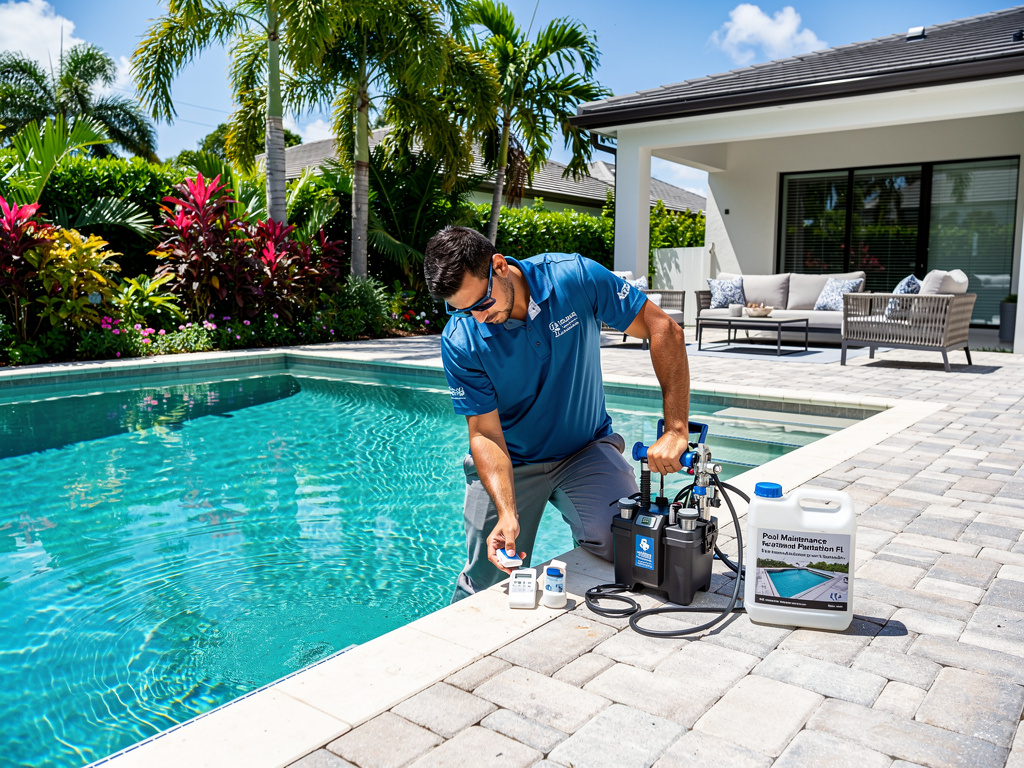
Year-Round Pool Maintenance in Plantation FL
There is no winter break for pool maintenance in Plantation. Unlike northern states where pools close for months, South Florida’s subtropical climate demands 52 weeks per year of consistent attention. UV radiation bleaches chlorine out of water rapidly, temperatures rarely drop low enough to significantly slow algae growth, and Plantation’s tree canopy ensures organic debris falls into pools every month of the year.
Plantation pool owners who attempt to “stretch” service to every other week typically pay for it with green pool treatments at $250–$450 per incident. Year-round weekly service is the standard — and the economics make it the right choice.
What Weekly Pool Maintenance in Plantation FL Includes
A complete weekly maintenance visit for a Plantation pool should cover:
- Skimming: Surface debris removal — critical in Plantation’s tree-lined neighborhoods
- Brushing: Walls, steps, and floor surfaces to disrupt biofilm and algae attachment
- Vacuuming: Floor debris removal, especially important under canopy coverage
- Water chemistry testing: pH, chlorine (free and combined), alkalinity, calcium hardness, cyanuric acid
- Chemical treatment: Adding chlorine, pH adjusters, algaecide, and stabilizer as needed
- Basket emptying: Skimmer and pump baskets cleaned
- Filter backwash/inspection: Periodic based on pressure readings
Plantation-Specific Maintenance Challenges
The Canopy Debris Problem
Plantation’s mature urban forest is the defining maintenance variable for pool owners in the city. Oak trees, ficus, queen palms, and tropical landscaping in communities like Jacaranda, Plantation Woods, and along tree-lined corridors like Broward Boulevard and Peters Road drop debris continuously. Weekly vacuuming is non-negotiable here — pools that skip vacuuming develop staining and organic buildup that requires acid washes to correct.
Phosphate Accumulation
Organic matter decomposing in pool water releases phosphates — the primary nutrient fueling algae growth. Plantation pools under heavy canopy have elevated phosphate levels compared to pools in open-lot developments. Effective maintenance in Plantation requires periodic phosphate testing (every 4–6 weeks) and targeted phosphate remover treatments when levels exceed 100–200 ppb. Companies that skip phosphate management often find their chlorine “disappearing” mysteriously — it’s being consumed fighting algae enabled by high phosphates.
Cyanuric Acid (CYA) Lock in Older Pools
Many of Plantation’s older homes have pools that have never been drained and refilled. Over years of adding stabilized chlorine (trichlor tabs), CYA levels accumulate beyond the effective range (above 80–100 ppm). High CYA locks chlorine in an inactive state — the pool reads “chlorine present” on tests but algae grows anyway. If your Plantation pool turns green despite high chlorine readings, CYA lock is a likely cause. The fix is a partial drain and refill — typically $150–$300 for the service.
Equipment Age
Plantation homes built in the 1960s–1980s often have aging single-speed pumps, sand filters from the 1990s, and original plumbing. Annual equipment inspection — checking for cracks, worn o-rings, pressure gauge accuracy, and pump motor health — should be part of any Plantation maintenance program. Catching a failing pump early costs $200–$400 to repair; replacing one that blows in a South Florida summer costs $800–$1,400.
Seasonal Maintenance Peaks in Plantation FL
While Plantation pools need maintenance year-round, certain periods demand extra attention:
- Summer (June–September): Peak heat + rain = maximum algae pressure. Weekly service is critical; bi-weekly creates serious risk of green pool events.
- Rainy season (May–October): Heavy rainfall dilutes chemicals and introduces phosphates from runoff. Chemistry corrections needed more frequently.
- Post-storm: Hurricane season (June–November) can leave pools full of debris, diluted chemistry, and potential equipment damage. Post-storm service visits are standard.