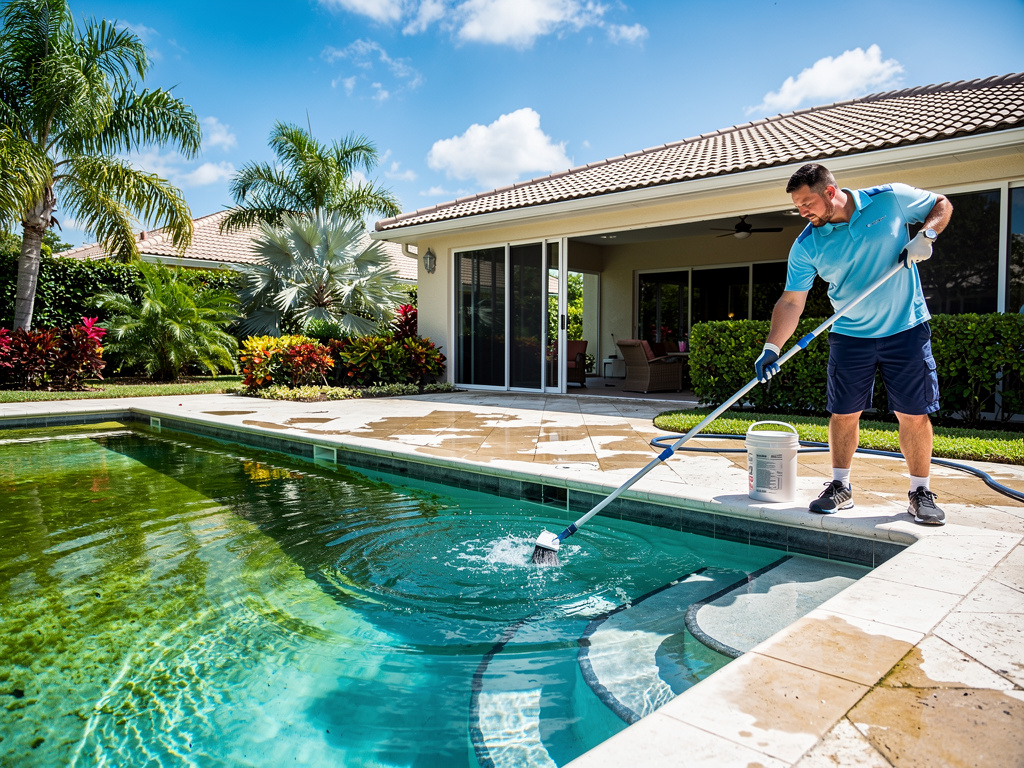
Green Pool Recovery in Hollywood FL — Prevention and Treatment for a Beach City
Green pools are a recurring issue throughout South Florida, but Hollywood FL’s specific mix of older homes with accumulated chemistry challenges, South Florida’s demanding rainy season, and a diverse community where some households manage pools without consistent professional service creates a green pool market with several distinct causes. Understanding which cause is responsible for your Hollywood pool’s green condition is the diagnostic step that determines whether standard shock treatment will work or whether a different approach is needed.
The Most Common Green Pool Causes in Hollywood FL
Wet Season Chemistry Disruption
Hollywood’s June-October rainy season is the primary green pool season. The daily thunderstorm pattern — afternoon storms that can drop 1-3 inches of rain in an hour — simultaneously depletes free chlorine through dilution, drops pH through acidic rainfall, and reduces alkalinity. A pool maintained with bi-weekly service enters a 10-14 day gap between visits during peak rainy season with chemistry under sustained attack. Chlorine depletes to zero 3-5 days after the last service visit in peak summer conditions. The remaining 5-9 days of the bi-weekly gap provide perfect conditions for algae establishment. This cycle produces predictable rainy season green pools that weekly service entirely prevents.
CYA Stabilizer Lock in Older Hollywood Pools
Hollywood’s mid-century neighborhoods have a specific green pool risk pattern that confuses homeowners: the pool tests at adequate chlorine levels but goes green anyway, doesn’t respond to shock, and recurs after clearing temporarily. This is the signature of CYA stabilizer lock — accumulated CYA above 80 ppm from years of trichlor tablet use that has rendered the measured free chlorine largely ineffective as a sanitizer.
Diagnosis requires a proper CYA test (not a standard two-parameter dip strip). If CYA is above 80 ppm, the resolution is partial drain-refill — typically removing 30-50% of the pool water and replacing with fresh tap water to dilute CYA below 70 ppm. After dilution, chemistry is re-established and the chlorination method should transition to liquid chlorine or unstabilized shock rather than returning to trichlor tablets that will re-accumulate CYA.
Black Algae in Older Plaster
Hollywood’s oldest pools — those with original 1960s-1980s plaster that has roughened with age — are particularly vulnerable to black algae. Rough plaster creates more surface area for black algae holdfasts to anchor, making established black algae colonies genuinely difficult to eradicate without mechanical intervention. Early-stage black algae appears as small dark spots on pool surfaces, particularly on steps, corners, and the waterline. Treating these spots immediately with steel brush scrubbing and targeted chlorine application before the colony establishes is far easier than treating a widespread black algae infestation.
Fort Lauderdale Pool Service provides green pool recovery and preventive weekly maintenance throughout Hollywood FL. Contact us for a diagnosis and treatment plan for your Hollywood pool.