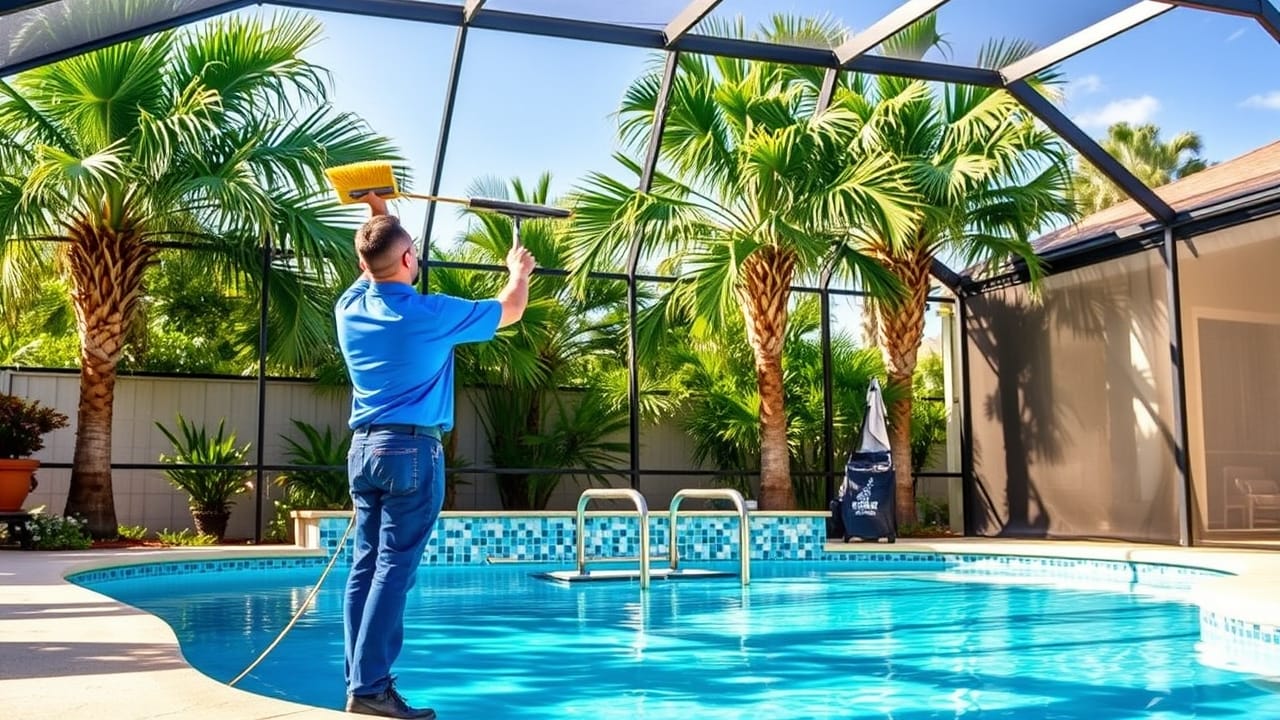
Cooper City is one of those Broward County communities that flies under the radar — smaller than its neighbors Pembroke Pines and Davie, tucked into the south-central part of the county with no beach access and no major commercial corridor, but home to some of the most well-maintained residential properties in the region. The city’s tight geography — roughly 9 square miles — combined with a high rate of long-term homeownership means pools here tend to be older, well-loved, and occasionally suffering from deferred maintenance that accumulated quietly over years of DIY care or inattentive service. This guide covers what Cooper City pool owners actually need to know: local chemistry conditions, neighborhood-specific maintenance patterns, seasonal considerations, and how to evaluate the service providers working in this market.
Cooper City Pool Chemistry: The Local Reality
Cooper City’s water supply draws from the same Broward County municipal system that serves its neighbors, and the chemistry characteristics are similar to south-central Broward broadly: moderately hard water with calcium hardness typically ranging from 230–310 ppm, alkalinity that trends toward the upper end of the ideal pool range, and a water profile that — in a pool subjected to South Florida evaporation — consistently trends toward calcium scaling rather than away from it.
What distinguishes Cooper City’s pool chemistry environment from coastal Broward markets is the combination of inland location and the city’s relatively dense tree canopy. Cooper City has a higher proportion of mature oak, ficus, and palm coverage than many of its neighbors — a legacy of its 1960s and 1970s development era when landscaping was planted with long-term growth in mind. That canopy contributes organic material to pools year-round: oak pollen in spring, leaf debris from deciduous species in fall, and the constant soft leaf drop from live oaks that never fully stops. Organic material in pool water consumes chlorine (increasing demand), feeds algae (through phosphate introduction), and strains filtration systems (through elevated debris load).
The practical consequence: Cooper City pools often need more frequent basket cleaning, higher baseline chlorine feed rates for saltwater systems, and more regular phosphate testing than pools in neighborhoods with lower canopy cover. A service provider calibrating Cooper City pools to a generic south Broward baseline without accounting for the organic load is leaving those pools under-treated.
Cooper City Neighborhoods and Pool Service Profiles
Cooper City’s small footprint means its neighborhoods are geographically compact, but the difference in pool age, equipment generation, and maintenance history between the eastern and western sections of the city is substantial enough to affect service approach.
Embassy Lakes and the Western Communities
Embassy Lakes — the largest master-planned community in Cooper City — was developed primarily in the late 1980s and 1990s along the western edge of the city near Flamingo Road. Pools in Embassy Lakes tend to be in the 25–35 year age range, which places them squarely in the window where original plaster may have been resurfaced once but is approaching the end of its second service life, original return jets may have calcified, and equipment that was installed during the early saltwater chlorination adoption period may be showing its age. Embassy Lakes pools also sit within a community that has its own HOA amenities including community pools — the dual maintenance context (individual pool plus community pool compliance) is common for residents here.
The Embassy Lakes community is notable for its mature landscaping along internal roadways and within individual lots. Pools backing up to green belts or landscaped common areas see the highest organic load of any Cooper City neighborhood and benefit most from the phosphate management approach discussed above.
Rock Creek and Central Cooper City
Rock Creek and the central residential sections of Cooper City represent the city’s original development core — homes built from the late 1960s through early 1980s on modest lots with pools that have 40–50 years of history. These pools are the most likely to have original plaster surfaces (multiple resurfacings), original plumbing that has experienced decades of Florida mineral cycling, and equipment that has been replaced piecemeal rather than as a coordinated system upgrade. Single-speed pump motors are still common in this part of Cooper City, running constant cycles that keep electricity bills elevated and rarely operating at the optimal flow rate for the pool’s filtration needs.
Service in the Rock Creek area often involves more diagnostic work than straightforward maintenance — identifying why a pool that’s been maintained for 40 years is suddenly losing water (liner crack vs. equipment leak vs. evaporation), why filter pressure spikes faster than it should (channeling in aging sand media vs. partial blockage vs. incorrectly sized replacement cartridge), or why chlorine demand has increased in a pool that’s been stable for years (new surface porosity from plaster erosion vs. increased organic load vs. cyanuric acid depletion).
Monterra and Newer Western Development
Monterra, Cooper City’s newest major community development along Flamingo Road in the western section, was built in the 2000s and 2010s and features modern construction with pools equipped with variable-speed pumps, saltwater chlorination, LED lighting, and in many cases full automation systems. The maintenance profile here is fundamentally different from the older sections of Cooper City: lower corrective intervention needs, higher diagnostic complexity when automation systems fault, and stronger energy efficiency from variable-speed equipment when properly programmed. Homeowners in Monterra with older-generation saltwater systems — first-generation Hayward or Pentair salt cells from the early 2000s — are now dealing with aging components that were leading-edge technology 20 years ago but are approaching end of service life today.
Flamingo Gardens and Southeast Cooper City
The southeastern section of Cooper City adjacent to the Flamingo Gardens botanical park corridor sees pools with one distinctive characteristic: proximity to established botanical specimen plantings creates a higher pollen and organic debris environment than most other Cooper City neighborhoods. Spring pollen season in this area is notably more intense than in the northern sections of the city, and the combination of mature royal poinciana, jacaranda, and tropical specimen trees means pool filtration in these neighborhoods spikes in pressure more rapidly than average during March and April.
Seasonal Pool Maintenance in Cooper City
Cooper City follows the same broad seasonal pattern as all of Broward County, but the city’s canopy coverage and older housing stock create some variations worth noting.
November Through February: Maintenance Window
Broward’s dry season is the period of lowest chemistry pressure and highest opportunity for proactive equipment maintenance. In Cooper City, where a significant portion of the pool stock is 30–50 years old, dry season is critical for surface and equipment assessment — identifying plaster that’s thinning, checking for hairline cracks before they expand, inspecting heat exchanger condition in the heaters that actually get used when January nights drop, and descaling salt cells that have been running through summer’s elevated calcium-demand conditions.
Even during dry season, Cooper City’s tree canopy means basket cleaning doesn’t stop — live oak leaf drop is year-round, and pools under significant canopy cover require attention to pump basket capacity even in January when chemistry is stable and algae pressure is minimal.
March Through May: Pollen and Transition
Spring in Cooper City hits harder than in lower-canopy markets. Oak pollen accumulation in March creates a yellow-green film on pool surfaces and skims as a thick layer across the waterline. This pollen introduces phosphates, consumes chlorine, and can overwhelm skimmer baskets between service visits if not managed actively. We increase service visit frequency for Cooper City accounts with heavy tree coverage during March and April specifically, and we pre-treat with phosphate remover ahead of peak pollen season to reduce the chemical demand that follows the pollen load.
Water temperature climbs above algae-growth threshold (80°F) in April in most years for Broward County inland markets, and Cooper City pools in shaded locations — under significant canopy — warm more slowly than open pools, which actually extends the window before algae pressure peaks. This is one area where the canopy works in the homeowner’s favor.
June Through October: Rainy Season Management
Cooper City’s rainy season pool maintenance follows the same pattern as south-central Broward broadly: weekly rainfall of 3–7 inches dilutes chemistry, drops cyanuric acid over time, and introduces organic material from the surrounding landscape. Saltwater system output needs to be calibrated upward at the start of rainy season and monitored throughout. For Cooper City pools with older single-speed pumps still running on original equipment, rainy season is when the limitations of aging circulation systems become most apparent — a pump that can barely keep up during dry season clean conditions can fall behind during rainy season elevated debris loads.
Hurricane preparation for Cooper City pools involves the same protocol as elsewhere in Broward: chemistry balanced to the high end before expected storms, loose equipment secured, automation systems configured for storm mode. Post-storm, the combination of debris load from Cooper City’s mature tree canopy and chemical dilution from rain can be more significant than in lower-canopy neighborhoods — we prioritize Cooper City accounts with heavy canopy cover for post-storm dispatch.
Pool Services Available in Cooper City
Fort Lauderdale Pool Service covers Cooper City with the same full-service program available throughout Broward County. Our Fort Lauderdale Pool Service team understands the specific conditions Cooper City pools face — the tree canopy organic load, the aging housing stock’s equipment patterns, and the chemistry dynamics of south-central Broward water. Full details and coverage information are available on our Cooper City pool service page.
Weekly Pool Maintenance
Our weekly maintenance program for Cooper City accounts includes the full chemistry panel — pH, free chlorine, total chlorine, total alkalinity, calcium hardness, cyanuric acid, and salt level for saltwater pools — plus chemical adjustment, surface brushing, basket emptying (pump and skimmer), visual equipment inspection, and a digital service report. For Cooper City accounts with heavy canopy coverage, we note basket capacity at each visit and flag accounts where debris accumulation between weekly visits suggests more frequent basket service is warranted.
Equipment Service and Repair
Cooper City’s older housing stock means equipment diagnostics are a meaningful part of our service profile here. We service and repair all major brands — Hayward, Pentair, Jandy, Zodiac, Sta-Rite — and carry common replacement parts on service trucks. For single-speed pump replacement with variable-speed units (a high-value upgrade for older Cooper City pools), we handle the full installation and programming, and the energy savings in Florida’s year-round operating season typically produce a payback period of 18–30 months.
Phosphate Treatment and Algae Prevention
Given Cooper City’s elevated organic load from tree canopy, phosphate management is a more active part of our service protocol here than in lower-canopy markets. We test phosphate levels quarterly at minimum and apply phosphate remover when levels approach or exceed 500 ppb. For accounts adjacent to significant green belt areas or with heavy spring pollen accumulation, we pre-treat ahead of the pollen season rather than waiting for elevated readings after the fact.
Green Pool Remediation
Algae blooms in Cooper City during rainy season can develop quickly given the combination of phosphate-rich runoff, high UV intensity, and the chlorine dilution that follows heavy rain events. Our remediation protocol — shock treatment, algaecide, physical brushing, filter cycling — is followed by a 48–72 hour return visit to confirm clearance before restoring the standard maintenance schedule. We diagnose the root cause (phosphates, CYA depletion, salt cell underperformance, circulation failure) rather than treating the symptom alone.
Salt Cell Descaling and Tile Cleaning
South-central Broward’s moderately hard water makes salt cell descaling and waterline tile cleaning recurring services rather than emergency interventions. We include scheduled descaling for saltwater accounts and recommend annual or semi-annual tile cleaning for most Cooper City pools based on the calcium hardness of their fill water and the evaporation rate of their specific installation (shaded pools evaporate less and scale more slowly than open-sun pools).
Common Pool Problems in Cooper City
Elevated Debris Load Between Visits
Cooper City’s tree canopy is the city’s most consistent pool maintenance challenge. Pools under significant oak or ficus coverage can accumulate enough leaf and debris material between weekly visits to partially block skimmer baskets, reduce suction to the pump, and introduce enough organic material to noticeably elevate chlorine demand. For high-canopy accounts, we recommend robotic pool cleaners that can manage mid-week debris accumulation between service visits, and we assess basket configuration to ensure adequate capacity for the debris volume the pool produces.
Aging Single-Speed Pumps
Rock Creek and central Cooper City still have a meaningful number of original single-speed pump motors operating on residential pools. These pumps run at a fixed high speed that’s inefficient for normal filtration (which requires much lower flow than the pump is designed to deliver) and creates higher than necessary wear on all downstream equipment. They also run constant cycles rather than the variable schedules that optimize pool turnover for different times of day. The switch to variable-speed is well worth evaluating for any Cooper City pool still running original single-speed equipment.
Plaster Surface Erosion
Cooper City’s older pool stock has a meaningful number of pools with plaster surfaces approaching the end of their service life — surfaces that feel rough underfoot (calcium crystal exposure as the plaster matrix thins), show visible staining that no longer responds to chemical treatment, or have developed porosity that makes algae removal progressively harder despite correct chemistry. These are pools that need replastering, not just more aggressive service. We’re transparent about this diagnosis when we see it — continuing to service a pool whose surface issues require resurfacing isn’t doing the homeowner any favors.
Post-Rain Chemistry Instability
Cooper City’s inland location means it doesn’t benefit from the mild coastal buffering that softens chemistry swings in beachside communities. After significant rain events — common from June through September — Cooper City pools can experience pH drops, alkalinity reductions, and cyanuric acid depletion that combine to create persistently cloudy or tinted water even when chlorine levels test adequate. We treat post-rain chemistry systematically: addressing each parameter in the correct adjustment sequence (alkalinity before pH, never both simultaneously) to avoid creating secondary imbalances that extend the recovery window.
Ficus Root Intrusion Near Older Pools
This is a Cooper City-specific issue that almost never comes up in newer construction markets: ficus trees planted adjacent to pools in the 1970s and 1980s have, in many cases, developed root systems large enough to threaten pool structure. We’ve seen ficus roots cause deck cracking, displace coping stones, and in severe cases affect plumbing lines. This isn’t a chemistry or equipment issue — it’s a structural concern that requires evaluation by a pool contractor if root proximity is observed during service visits. We flag these situations when we see them rather than treating them as outside the scope of a maintenance technician’s observation.
Choosing a Pool Service Provider in Cooper City
Cooper City’s small geographic footprint means fewer dedicated pool service routes stop here than in larger neighboring markets. Some homeowners end up with providers based out of Pembroke Pines or Davie who add Cooper City accounts as route extensions — which can mean less consistent service, longer response times for equipment calls, and technicians who don’t know the city’s specific conditions. When evaluating providers:
Ask About Canopy-Specific Service Protocols
A provider who services Cooper City regularly should be able to speak to the phosphate and debris management challenges the tree canopy creates. If they treat every Cooper City pool the same as a pool in a open-lot subdivision in Tamarac, they’re not calibrating their service to this market’s actual conditions.
Verify Equipment Diagnostic Capability
Given the older housing stock, Cooper City pools need service providers who can diagnose equipment issues — not just technicians with a test kit and a brush. Ask specifically whether the company has technicians who can work on older single-speed pumps, diagnose automation system faults, and identify plumbing issues that might be misread as chemistry problems.
Confirm Full Chemistry Panel Testing
The full parameter set matters for Cooper City: pH, free chlorine, total chlorine, total alkalinity, calcium hardness, cyanuric acid, and salt level for saltwater pools. A provider testing only pH and chlorine isn’t catching the calcium hardness trends that drive scale formation in south-central Broward water, and isn’t tracking the CYA depletion that follows heavy rainy season dilution.
Licensing and Insurance
Florida CPO (Certified Pool/Spa Operator) certification is required for chemical maintenance work, and Certified Pool Contractor (CPC) licensing is required for repair and construction. Verify both before signing a service agreement. An unlicensed provider performing equipment repairs creates homeowner liability exposure that materializes most painfully during insurance claims.
Frequently Asked Questions About Pool Service in Cooper City
How often does a Cooper City pool need professional service?
Weekly service is the standard for Cooper City residential pools. The combination of South Florida’s year-round heat, rainy season chemistry dilution, and Cooper City’s higher-than-average organic debris load means pool chemistry shifts meaningfully within seven days during most of the year. Monthly service is not adequate for maintaining proper water balance in this climate and this canopy environment.
Why does my Cooper City pool need so much brushing?
Brushing removes organic debris, dead algae, and calcium deposits from pool surfaces before they bond permanently. For Cooper City pools with significant tree coverage, brushing also helps dislodge pollen and fine organic material that settles on surfaces between service visits. Older plaster surfaces with some porosity actually need more brushing than smooth newer surfaces because the textured surface provides more attachment points for algae and debris. Weekly brushing is not optional — it’s integral to maintaining surface condition and reducing long-term resurfacing costs.
What does pool service cost in Cooper City?
Weekly full-service maintenance in Cooper City typically runs $120–$165/month, in line with the broader south-central Broward market. Pools with heavy tree coverage may see slightly higher pricing to account for the additional basket cleaning and phosphate management the canopy environment requires. Equipment repairs are billed separately at standard hourly rates plus parts.
My Cooper City pool is 30+ years old — is it worth maintaining professionally?
Almost certainly yes, with an honest surface and equipment assessment first. A 30–40 year old pool with sound structure, serviceable plaster (even if approaching resurfacing), and functional equipment is worth maintaining — professional service extends the interval before resurfacing becomes necessary, prevents equipment failures that cost significantly more than service plans, and preserves the pool’s value as a property amenity. The caveat is surfaces that have genuinely reached end of life — pools with eroded plaster that traps algae regardless of chemistry management need resurfacing before professional maintenance can deliver its full value.
Does Fort Lauderdale Pool Service cover Cooper City?
Yes. We maintain residential pools throughout Cooper City, including Embassy Lakes, Rock Creek, Monterra, and the older central neighborhoods. Our technicians understand Cooper City’s specific canopy conditions, water chemistry profile, and older-equipment service requirements.
Get Professional Pool Service in Cooper City
Fort Lauderdale Pool Service provides weekly maintenance, equipment repair, and specialty services for residential pools throughout Cooper City. We understand what makes this market distinct — the tree canopy’s phosphate and debris contribution, the aging equipment profiles in Rock Creek and central Cooper City, and the moderately hard water chemistry that drives calcium management requirements throughout south-central Broward. Whether you’re dealing with a pool that keeps turning green despite regular service, aging equipment that needs a proper diagnostic, or simply want weekly service that actually accounts for Cooper City’s specific conditions, we’re ready to help.
Contact us today to schedule a free water quality assessment and get a quote for Cooper City pool service.