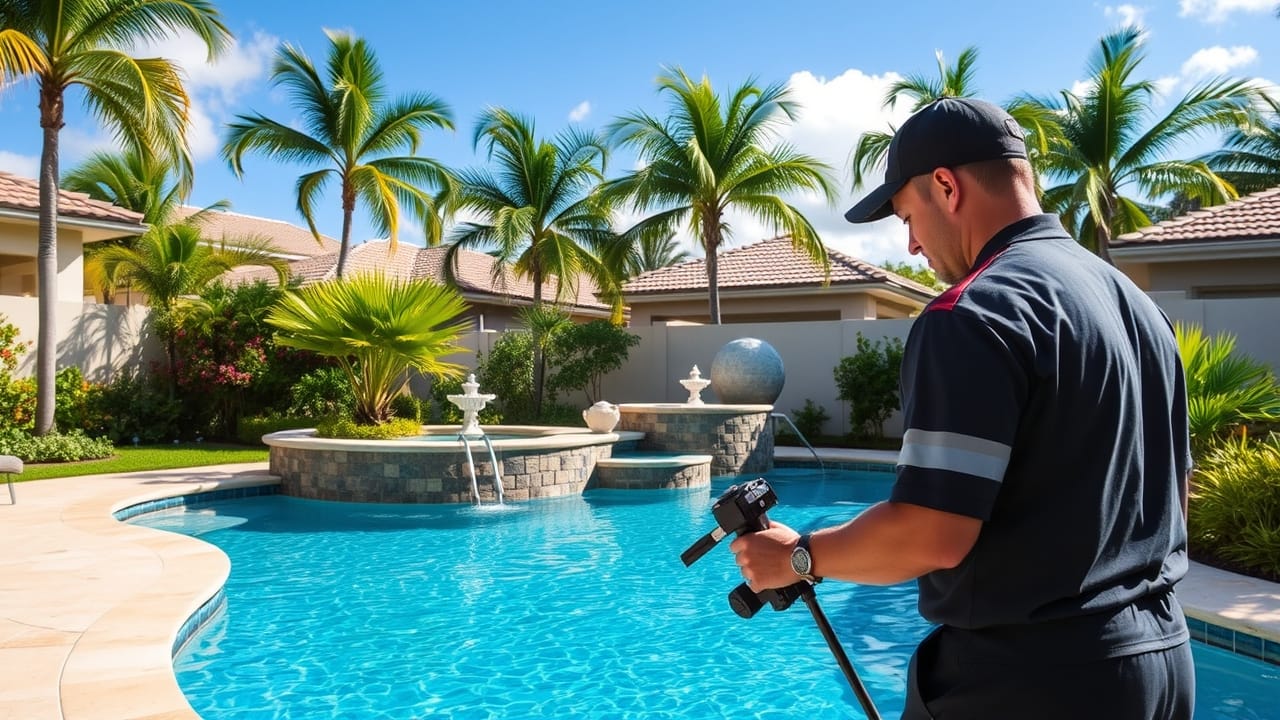
Hollywood, Florida sits between Fort Lauderdale and Miami in a stretch of Broward County that sees some of the highest year-round pool usage in the state. With the Atlantic Ocean to the east, the Hollywood Beach Broadwalk drawing seasonal visitors, and a residential landscape that spans young families in Emerald Hills to established snowbirds in Century Village, pools here reflect the city’s diversity — and so do their maintenance needs.
This guide covers everything Hollywood homeowners need to know about keeping a pool safe, clean, and operating efficiently year-round: what professional weekly service includes, how Hollywood’s climate and neighborhoods create distinct challenges, common repair needs, HOA compliance, storm preparation, and how to choose a pool company that understands the local environment.
For dedicated Hollywood pool service from a team that knows Broward County, read on — then reach out for a free evaluation.
Hollywood, FL Pool Ownership: The Climate Reality
Hollywood’s coastal position gives it a genuinely tropical climate that demands active year-round pool management. Understanding what the environment does to pool chemistry and equipment is the first step toward protecting your investment.
Heat and UV Intensity
Hollywood averages 246 sunny days per year, with UV index regularly hitting 10–11 from April through October. At those UV levels, unstabilized free chlorine degrades almost entirely within a single day of sun exposure. Even properly stabilized pools require weekly chemistry checks — skipping a visit in July or August can turn a balanced pool into an algae problem within days.
Rainy Season Chemical Disruption
June through October brings Hollywood’s rainy season — concentrated afternoon thunderstorms that can dump 1–2 inches of rain in under an hour. A single heavy storm dilutes total alkalinity, drops pH toward the acidic range, and introduces phosphate-laden runoff that feeds algae. Post-storm chemical rebalancing is one of the most overlooked aspects of Hollywood pool maintenance.
Salt Air and Humidity
Hollywood’s oceanfront blocks and Intracoastal communities face elevated salt air exposure that accelerates corrosion of pump housings, motor windings, filter bands, and heater components. Even homes several miles inland experience higher ambient humidity than non-coastal markets, shortening equipment lifespan compared to drier climates.
Year-Round Swimming Season
Unlike northern Florida markets, Hollywood pools don’t have an off-season. Equipment runs 12 months a year, bather loads continue through winter (especially for snowbird households), and algae pressure never fully drops off. This continuous demand makes consistent professional service more — not less — important than in seasonal markets.
Hollywood, FL Neighborhoods and Pool Service Considerations
Hollywood’s neighborhoods range from beachfront high-rise adjacent communities to sprawling inland residential areas, each with its own pool service profile.
Emerald Hills
One of Hollywood’s most desirable residential neighborhoods, Emerald Hills features larger single-family homes with well-appointed pools. The area’s mature tree canopy — oak, mahogany, and tropical varieties — introduces significant organic debris that elevates phosphate levels and demands thorough weekly skimming and vacuuming. Pool service companies working in Emerald Hills need to allocate extra time per visit for debris management.
Hollywood Hills
Located in the western part of the city near the Broward/Dade county line, Hollywood Hills features a mix of established ranch homes and newer construction. Pools here tend to run warmer in summer due to reduced ocean breezing, which accelerates chemical consumption and algae growth potential during peak season.
West Lake Area and Intracoastal Communities
Homes along the Intracoastal waterway and near West Lake face direct saltwater exposure. Boats, fishing, and waterfront activity mean higher bather loads and more frequent introduction of organic matter. Equipment corrosion rates are elevated, and calcium hardness monitoring needs more frequent attention.
Century Village and Active Adult Communities
Hollywood’s several active adult communities — including Century Village — typically feature community pools rather than individual residential pools. These high-bather-load pools require commercial-grade chemical management and more frequent service visits than single-family pools. HOA documentation requirements are also stricter in these communities.
Liberia and Dania Beach Corridor
The southwestern residential areas of Hollywood, including the corridor approaching Dania Beach, feature densely spaced homes with smaller pools. Service routes here can be efficient, but the proximity to I-95 and industrial areas means higher airborne particulate levels that increase pool filter loads.
Downtown Hollywood and Young Circle Area
Newer construction near Downtown Hollywood and the ArtsPark area at Young Circle features modern pool systems, often including automation, salt chlorinators, and variable-speed pumps. These pools benefit from technicians familiar with digital pool controllers and smart pool equipment.
What Professional Pool Service in Hollywood, FL Includes
Understanding what a proper weekly service visit includes helps Hollywood homeowners evaluate their current pool company and recognize inadequate service before it costs them money.
Full Water Chemistry Panel
Every service visit should include testing free chlorine, combined chlorine (chloramines), pH, total alkalinity, calcium hardness, and cyanuric acid. In Hollywood’s climate, all six require weekly attention — not spot checks. Chemical adjustments should follow test results, not a preset dosing schedule.
Surface Skimming
Leaves, insects, seed pods, and wind-blown debris need to be removed from the water surface before they sink and begin decomposing. In Hollywood’s tree-heavy neighborhoods, thorough skimming can take 10–15 minutes in itself.
Wall and Floor Brushing
Brushing pool surfaces — walls, steps, ledges, and corners — disrupts developing algae biofilm before it becomes visible growth. Neglecting brushing is the most common reason pools develop persistent algae problems despite otherwise adequate chemistry.
Vacuuming
Settled debris and fine sediment on the pool floor should be vacuumed at each visit. Robotic cleaners supplement manual vacuuming between visits but don’t replace it.
Basket Clearing and Filter Check
Skimmer and pump baskets collect debris and restrict flow when full. Both should be cleared at every visit. Filter pressure should be logged; backwashing or cartridge cleaning should occur when pressure rises 8–10 PSI above clean baseline.
Equipment Inspection
Visual inspection of the pump, filter, heater, and automation system at each visit catches wear patterns and early failures. In Hollywood’s salt-air and high-humidity environment, this step is particularly valuable for catching corrosion before it becomes a replacement-level problem.
Written Service Log
Chemistry readings, tasks completed, chemicals added, and equipment notes should be provided after every visit. This documentation is required by many Hollywood-area HOAs and invaluable when diagnosing recurring water quality issues.
Common Pool Repairs in Hollywood, FL
Hollywood’s year-round pool operation and coastal environment create a predictable set of repair needs that every homeowner should understand.
Pump Motor and Seal Failure
High humidity and salt air accelerate bearing wear and seal degradation in pool pump motors. A seal failure that goes unnoticed allows water into the motor, leading to rapid motor burnout. Variable-speed pump replacements are now legally required in Florida for residential pumps over 1 horsepower, and they offer 60–80% energy savings over old single-speed models.
Salt Chlorine Generator Maintenance
Saltwater pools are popular throughout Hollywood. The salt cell requires acid washing every 3–4 months to remove calcium scale buildup, and full cell replacement every 3–7 years. Consistent monitoring of salt levels (3,000–3,500 ppm) and cell voltage is essential for reliable chlorine generation.
Filter System Repairs
D.E. filter grids and sand filter media degrade over years of use. Cracked D.E. grids allow diatomaceous earth to bypass the filter and enter the pool. Channeled sand media reduces filtration efficiency and increases chemical consumption. Annual filter inspection catches developing issues before they require emergency service.
Pool Surface Staining and Scaling
Hollywood’s water supply and coastal mineral environment contribute to calcium carbonate scale deposits on pool tile and plaster surfaces. Regular tile brushing, appropriate pH management, and sequestering agents control scaling. More severe cases require professional tile cleaning or acid washing.
Automation System Issues
Newer Hollywood pools increasingly use Pentair, Hayward, or Jandy automation systems that control pumps, lights, heaters, and valves remotely. Water intrusion into control panels — common in South Florida’s humidity — causes communication failures, random equipment cycling, and sensor errors. Technicians familiar with pool automation are essential for these systems.
Pool Plaster and Resurfacing
Plaster surfaces in Hollywood homes typically require resurfacing every 10–15 years. Warning signs include rough texture, calcium nodules, visible staining that doesn’t respond to chemical treatment, and surface cracking. Modern finishes — pebble, quartz aggregate, glass tile — offer longer lifespans and improved aesthetics.
Pool Chemical Balancing: Hollywood’s Specific Demands
Hollywood’s subtropical climate makes chemical balance management more active than in most other parts of the country. Here’s what each key parameter requires in this environment.
Free Chlorine (2.0–4.0 ppm)
Primary sanitizer, rapidly consumed by UV, heat, and bather load. Cyanuric acid stabilizer is essential to slow UV degradation. During Hollywood’s peak summer months (June–September), chlorine demand increases significantly and may require mid-week supplementation for heavily used pools.
pH (7.2–7.6)
Hollywood’s heavy summer rainfall consistently drives pH toward the acidic range, requiring muriatic acid or sodium bisulfate additions after significant rain events. CO⊂2; off-gassing from pool aeration and heated pool surfaces can also cause pH drift upward over time.
Total Alkalinity (80–120 ppm)
Acts as the buffer that prevents pH from swinging widely. Rain dilution drops alkalinity; baking soda raises it. Weekly monitoring is essential during Hollywood’s June–October rainy season.
Calcium Hardness (200–400 ppm)
Low calcium causes plaster etching and equipment corrosion; high calcium causes scaling on surfaces and heat exchangers. Hollywood’s municipal water typically delivers moderate calcium, but summer evaporation concentrates it. Annual drain-and-refill may be needed if calcium hardness climbs above 600 ppm.
Phosphate Management
Phosphates from fertilizer runoff, organic decomposition, and municipal water are a significant algae fuel in Hollywood’s warm, sunny pools. Phosphate testing and treatment with lanthanum-based removers is increasingly standard practice for Hollywood pool service companies.
HOA Pool Requirements in Hollywood, FL
Many Hollywood residential communities are governed by HOAs with pool maintenance requirements. Knowing what’s expected — and documenting your compliance — protects you from fines and neighbor complaints.
Water Clarity Requirements
Most Hollywood HOAs require pool water to be visually clear, with the pool bottom visible from the deck. During summer’s heavy algae season, meeting this standard requires proactive chemistry management and reliable weekly service — not reactive treatment after problems develop.
Service Documentation
HOAs in communities like Emerald Hills and Hollywood Hills may require proof of professional service during periodic property reviews. Monthly service logs with chemistry readings, tasks performed, and technician information satisfy most HOA documentation requirements. Ask your pool service company to provide these automatically.
Pool Safety Barrier Compliance
Florida Statute 515 mandates approved pool safety barriers for all residential pools. Hollywood’s code enforcement actively pursues violations — especially after incidents. Many HOAs add requirements beyond the statute, including self-closing, self-latching gates, pool alarms, and door alarms on all home-to-pool-area entry points.
Rental Property Considerations
Hollywood’s significant vacation rental market adds another layer of pool compliance. Properties listed on short-term rental platforms in Hollywood must comply with city licensing requirements that include pool safety barrier compliance. Renters’ use also increases bather load and requires more aggressive chemistry management.
Hurricane and Storm Season Preparation
Hollywood’s direct coastal exposure makes hurricane preparation particularly important for pool owners. The city sits in one of South Florida’s most active storm corridors.
Pre-Storm Protocol
Lower pool water by 3–6 inches before a named storm to accommodate rainfall without flooding the deck. Do not drain the pool — hydrostatic pressure from saturated soil can lift an empty shell. Turn off all pool equipment at the main breaker. Remove and store all pool deck furniture, umbrellas, and accessories. Shock the pool to 10–15 ppm free chlorine to pre-treat the bacterial and organic load the storm will introduce.
Post-Storm Recovery
After the storm passes, remove debris from the pool as quickly as possible. Organic debris in warm water breeds bacteria and algae rapidly. Shock the pool again, test all chemistry parameters, and adjust before restarting any equipment. Inspect pump, filter, and electrical connections for storm damage before powering on.
Pool Cover Cautions
Standard pool covers are not designed for hurricane protection and should not be deployed before tropical-force storms. Improperly anchored covers can be driven into the pool by wind or catch wind and cause structural damage. Only rated safety covers should be used during storms.
Choosing a Pool Service Company in Hollywood, FL
Hollywood homeowners have dozens of pool service companies to choose from. Here’s how to separate the professionals from the price-cutters.
CPSC License Verification
Florida requires pool service companies to operate under a Certified Pool/Spa Contractor (CPSC) license issued by the Florida DBPR. Verify the license is current before signing any service agreement. Unlicensed operators have no accountability and often lack the chemical knowledge to properly manage water chemistry.
Test-Based Chemistry Management
The single most important differentiator between professional and amateur pool service is chemistry approach. A professional technician tests first, then adjusts. An amateur adds a preset amount of chemicals regardless of current readings. Ask directly: do you test before adding chemicals, and do I receive the test readings after each visit?
Repair Capability
Your weekly pool service company should either have in-house repair capabilities or a clear relationship with a repair contractor. Companies that only handle maintenance and have no repair path leave you scrambling when equipment fails — which it will, eventually.
Communication and Documentation
Modern pool service companies provide digital service reports after each visit. If a company can’t tell you what your alkalinity reading was on their last visit, that’s a red flag. Consistent documentation is what separates professional service from lawn-maintenance-style pool work.
Frequently Asked Questions About Pool Service in Hollywood, FL
How much does pool service cost in Hollywood, FL?
Weekly residential pool service in Hollywood typically runs $150–$280 per month depending on pool size, features (heater, salt system, automation), and service scope. Pools with waterfalls, spas, or high bather loads sit at the higher end. Be cautious of service quotes significantly below market — they usually reflect cut corners on chemistry, service time, or equipment attention.
How often should I have my pool serviced?
Weekly service is the professional standard for Hollywood pools. The city’s subtropical climate — intense UV, summer rainy season, year-round temperatures above 60°F — creates water quality conditions that deteriorate faster than bi-weekly service intervals can manage. During the June–October rainy season especially, weekly visits are essential for maintaining safe, clear water.
Why is my pool turning cloudy after it rains?
Cloudy water after rain almost always indicates disrupted water chemistry — specifically pH drop, alkalinity dilution, and introduction of organic matter or phosphates from runoff. Hollywood’s heavy summer storms can drop enough rain to meaningfully dilute your pool’s chemical balance in a single afternoon. Treatment involves re-balancing alkalinity and pH first, then adjusting chlorine levels, and running the filter on extended cycle until the water clears.
Do I need to worry about salt air damage to my pool equipment?
Yes — particularly if you live in Hollywood’s beachfront or Intracoastal areas. Salt air accelerates corrosion of metal pool components: pump motor housings, filter bands, heater heat exchangers, and electrical connections. Annual equipment inspection specifically looking for early corrosion is important for oceanside properties. Rinsing exposed metal components with fresh water after salt air events extends equipment life.
Is a saltwater pool easier to maintain in Hollywood’s climate?
Saltwater pools reduce how often you handle liquid chlorine, but they require the same weekly water chemistry testing and balancing. The salt chlorine generator cell needs regular acid washing (every 3–4 months) and eventual replacement (every 3–7 years). In Hollywood’s hard-water environment, calcium scale on the cell is a consistent maintenance requirement. The comfort benefit is genuine; the “set it and forget it” perception is not accurate.
Professional Pool Service Across Hollywood and Broward County
Hollywood pools deserve the same quality of professional care as any pool in South Florida — and given the city’s coastal exposure and year-round swimming season, the standard needs to be consistently high. Weekly test-based chemistry management, thorough cleaning, proactive equipment inspection, and documented service records are the foundation of responsible pool ownership here.
Our team delivers professional Fort Lauderdale pool service across all of Broward County, including every neighborhood in Hollywood, from Emerald Hills to the beachfront communities. Contact us today for a free pool evaluation and service proposal tailored to your pool and your home.